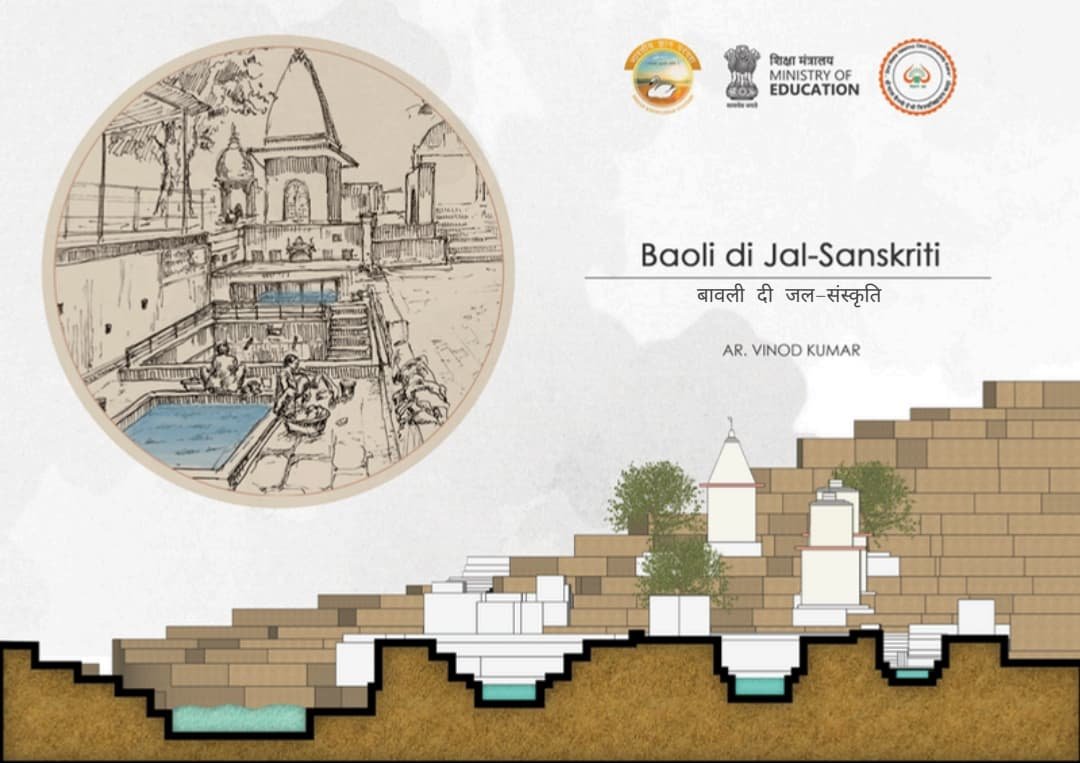
Shri Mata Vaishno Devi University (SMVDU) marked a significant academic milestone with the release of “Baoli di Jal-Sanskriti,” a scholarly work authored by Ar. Vinod Kumar. The book documents traditional water systems and indigenous knowledge of the Shivalik Hills. It is an outcome of a research project funded by the Indian Knowledge Systems (IKS) Division, Ministry of Education, Government of India, under the IKS Institutional Internship Program–2025.
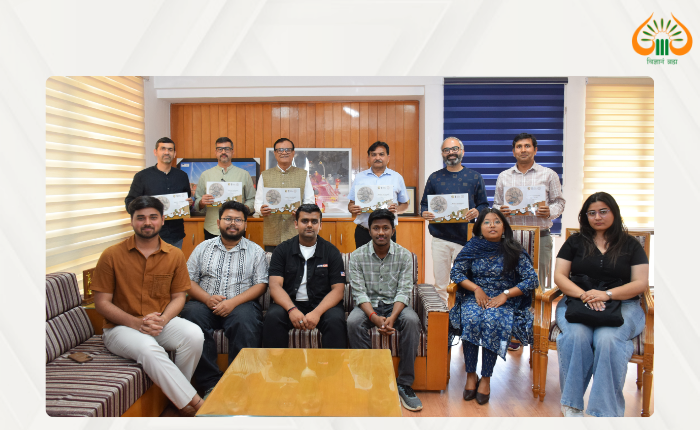
The book was formally released by Vice Chancellor Prof. Pragati Kumar in the presence of Dr. Amitabh Dwivedi, Dean, Faculty of Humanities; Ar. Abhiney Gupta, Head, School of Architecture & Landscape Design (SoALD); and Ar. Navin Gupta, Deputy Head, SoALD. The occasion was also graced by Mr. Anil Paba, a noted archaeologist, state awardee, and heritage conservation expert, who served as the local expert for the research project.
Based on the research project titled “Vanishing Architecture and Spatial Planning Wisdom for Traditional Sustainable Water Management in Trikuta Hills, Jammu and Kashmir: A Study of its Contemporary Relevance,” the book presents baolis as integrated hydro-cultural systems that interlink architecture, ecology, and community life, while critically examining their decline and contemporary relevance.
In his foreword, Padma Shri Dr. Shiv Dutt Nirmohi describes the book as an important contribution to understanding Duggar’s water culture. He emphasizes that baolis are not merely utilitarian structures but repositories of cultural traditions, religious beliefs, and architectural heritage. He also highlights their historical evolution and significance in sustaining communities in hilly terrains.
Speaking on the occasion, Prof. Pragati Kumar appreciated the initiative and stressed the importance of integrating traditional knowledge systems into modern planning frameworks to address emerging environmental challenges. He highlighted the work as a strong example of a multidisciplinary research approach, noting that it effectively bridges architecture, cultural studies, and environmental perspectives. Dr. Amitabh Dwivedi emphasized the importance of such documentation in preserving cultural memory and intangible heritage, which are often overlooked in contemporary planning discourse.
Ar. Abhiney Gupta and Ar. Navin Gupta underscored the academic and cultural significance of the publication, stating that it contributes meaningfully to sustainable architectural practices and context-sensitive planning. Mr. Anil Paba lauded the research for drawing attention to neglected water heritage and stressed the urgent need to conserve baolis as symbols of regional identity and ecological wisdom.
The research was led by Ar. Vinod Kumar, Assistant Professor, SoALD, SMVDU, as the Principal Investigator. Student interns—Killi Harsha Vardhan, Aman Chajgotra, Aditya Singh, Partha Pratim Roy, Mamita Newar, and Variga Khajuria—actively contributed through field documentation, case studies, analysis, sketching, and graphical presentations, supporting the completion of both the project and the book.
The publication documents several baolis across the Shivalik region, examining their architectural features, hydrological systems, cultural significance, and present condition, while also proposing strategies for their conservation and integration into contemporary planning frameworks.
The release marks an important step toward recognizing and revitalizing indigenous water heritage, offering valuable insights for researchers, planners, and policymakers working in the fields of sustainable development and cultural conservation. Faculty members of the School of Architecture congratulated the research team, and Ar. Vinod Kumar expressed gratitude to the University administration for their support in completing the project, as well as to the University Media Cell for their continued assistance in publishing the book.